Expert
Built by HSE Subject Experts
Our collections are crafted by industry specialists who understand the realities of modern HSE challenges. Every module blends practical insight with proven behavioural principles, giving your teams resources they can trust and apply immediately.
Engaging
Highest Quality Content
Designed to keep learners motivated from start to finish, our e-learning and resources use relatable scenarios, crisp visuals and interactive tasks to bring Safety Culture to life. It’s learning that captures attention and drives real, lasting behaviour change.
Rollout
We’re the tech experts
We make implementation effortless. Your team gets guided onboarding with resources, support and clear pathways for rollout, ensuring your collections launch smoothly and deliver maximum impact from day one.
What’s included?
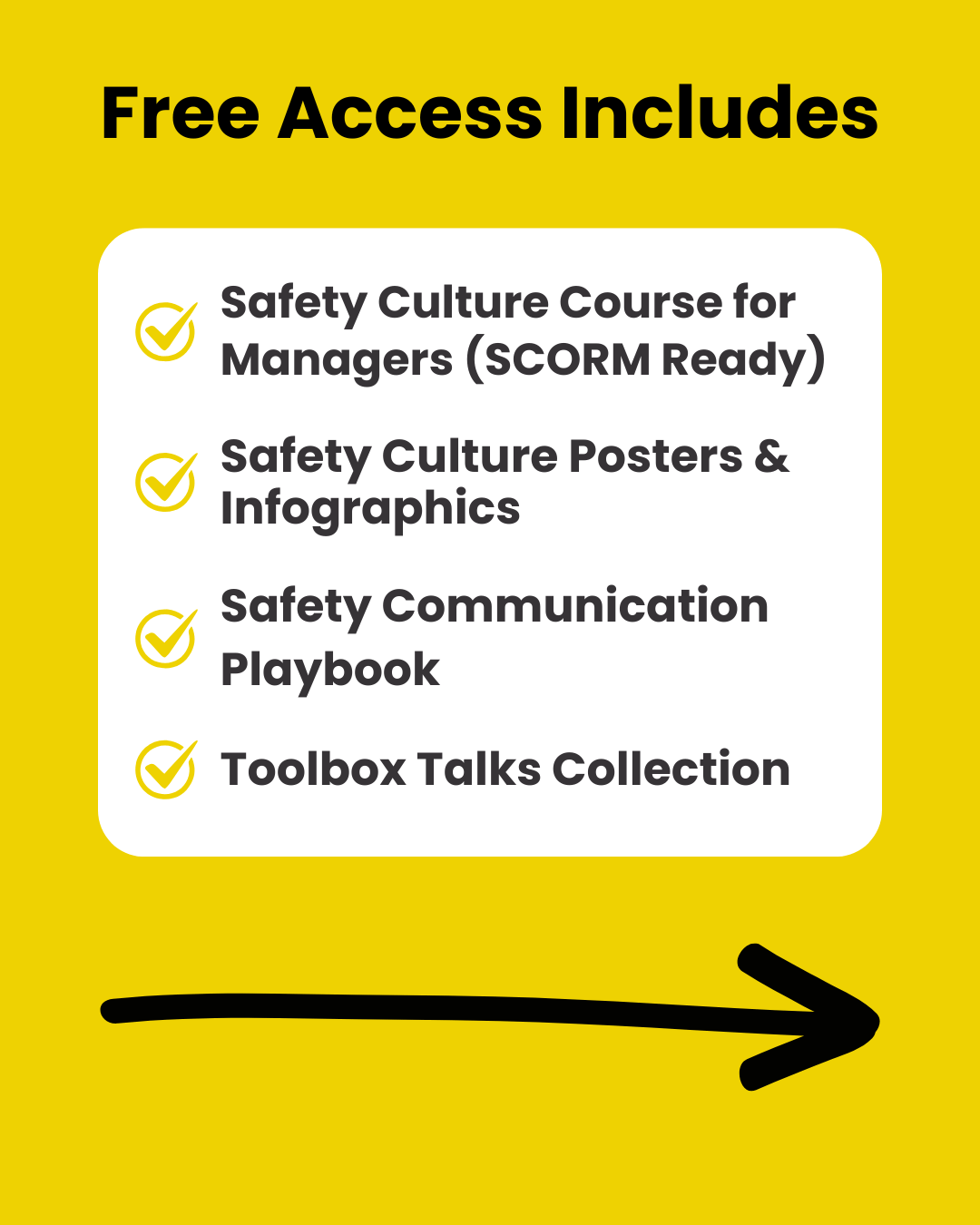
Safety Culture Collection
In this module, learners explore what safety culture really means, going beyond compliance to understand the psychological, behavioural, and organisational dimensions of health and safety. They examine the gap between rules and real safety, the cost of inaction across morale, downtime, and reputation, and why culture requires everyone’s participation. Practical examples show how small everyday decisions, like reporting near-misses, shape a safer workplace.
Learners investigate the behavioural drivers behind risky decisions, uncovering how risk normalisation, production pressure, optimism bias, and peer influence shape choices. Through micro-scenarios, participants see how small, rationalised shortcuts can escalate into incidents. By understanding these psychological patterns, learners gain insight into why workers take risks and develop the awareness to anticipate, prevent, and address unsafe behaviours before they compromise safety.
This module helps learners shift from management-only responsibility to shared ownership, showing what frontline accountability looks like in practice. Participants explore behaviours that model ownership, such as speaking up, checking workspaces, and challenging unclear instructions, while dispelling the misconception that responsibility equals blame. Practical examples across industries illustrate how collective ownership drives a culture where everyone actively contributes to safer outcomes.
Learners focus on the critical role of communication in safety culture, understanding how poor dialogue can create risk. Through role-play and scenario exercises, they practice asking for clarification, speaking up safely, and giving and receiving feedback constructively. Participants gain the skills to communicate in ways that prevent accidents, making clear, respectful, and proactive interactions a core part of everyday safety behaviour.
This module teaches participants to identify hazards early, distinguishing between near misses, incidents, and actual dangers. Using interactive exercises, learners practice quick hazard-spotting and decision-making in dynamic environments. They also learn to report risks proactively rather than waiting for proof. By reinforcing proactive behaviours, the module empowers employees to act confidently and prevent hazards from escalating into incidents.
Learners explore why reporting near-misses and incidents is critical to continuous improvement. They understand the concept of a just culture, where honest mistakes are not punished, and learn how reports close the feedback loop to drive organisational learning. Through micro-simulations, participants experience the impact of speaking up, seeing how reporting decisions influence outcomes and strengthen a culture of shared accountability.
This module focuses on turning safety culture into everyday habits. Learners examine habit loops, learn how to replace unsafe norms, and practice personal habit-building exercises. Micro-checklists and practical tools help embed conscious “stop and think” behaviours during high-risk moments. By translating culture into consistent personal actions, participants develop the skills to make safe choices automatic and prevent unsafe practices from becoming routine.
Learners examine how team dynamics shape safety culture, focusing on collective responsibility and peer support. Through interactive scenarios, they practice intervening constructively, countering bystander effects, and reinforcing safe behaviours. Participants gain practical strategies to look out for colleagues, support each other in high-pressure environments, and build a team mindset where safety is a shared priority rather than an individual task.
This module tackles the tension between productivity and safety, helping learners navigate real-world pressures such as tight deadlines, staff shortages, and client demands. Through scenario simulations, participants explore trade-offs and understand red-line principles that must never be compromised. By confronting these challenges, learners develop the judgement and confidence to make the right decisions under pressure, ensuring safety is never sacrificed for speed or output.
In the final module, learners translate knowledge into action by reviewing cultural pillars, reflecting on immediate changes, and committing to practical behaviour shifts. They create personal action plans and pledges, with clear guidance on who to consult and how to model behaviours. Participants leave empowered with the tools, confidence, and accountability to embed a sustainable safety culture and influence lasting organisational change.

How does it work?
Unlimited Access
One subscription gives your organisation unlimited users, unlimited use, and access to our full Safety Culture library, including every new course we release.
Safety Culture Library
A growing collection of Safety Culture courses designed for managers, leaders, and site teams making decisions under real-world pressure.
Blended Learning
Short digital courses supported by workbooks and training-room resources, Toolbox-Talks, Supervisor Guides and much more, making learning practical, discussable, and usable on site.
Customer-Led Content
Our customers help shape what we build next, ensuring content reflects current risks, real incidents, and operational reality.
Bespoke Engagement Strategy
We onboard around your structure, roles, and risk profile, creating a tailored engagement plan that drives adoption and behaviour change.
Sustainable Behaviour Change
Focused on better decisions, stronger conversations, and ownership of safety, not just course completion.